Colonization (British English: colonisation) is a process of establishing control over areas or peoples for foreign people to advance their trade, cultivation, exploitation and possibly settlement.
Medieval Europe was largely self-contained until the First Crusade (1096–99), which opened new political and commercial communications with the Muslim Middle East.
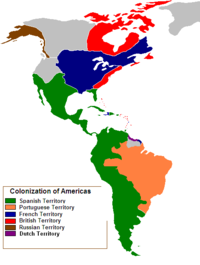
As Europeans moved beyond exploration and into colonization of the Americas, they brought changes to virtually every aspect of the land and its people, from trade and hunting to warfare and personal property. European goods, ideas, and diseases shaped the changing continent.
Merriam-Webster defines colonialism as “control by one power over a dependent area or people.” It occurs when one nation takes control of another for benefits such as resources. Often, they force...
During the Industrial Revolution, demand for cotton, tin, and oil drove further colonization of resource-rich areas, including sub-Saharan Africa and Southeast Asia.
What is Colonization? Colonization refers to the process of establishing control over foreign territories or peoples, often for purposes such as cultivation, trade, exploitation, or settlement.
Colonization is the process by which a country establishes control over foreign territories, often involving the settlement of its people and the exploitation of resources.
The phenomenon of colonization is one that has occurred around the globe and across time. Various ancient and medieval polities established colonies – such as the Phoenicians, Babylonians, Persians, Greeks, Romans, Han Chinese, and Arabs.
 The phenomenon of colonization is one that has occurred around the globe and across time. Various ancient and medieval polities established colonies – such as the Phoenicians, Babylonians, Persians, Greeks, Romans, Han Chinese, and Arabs.